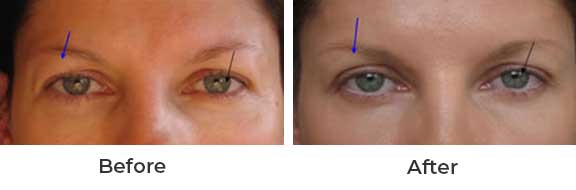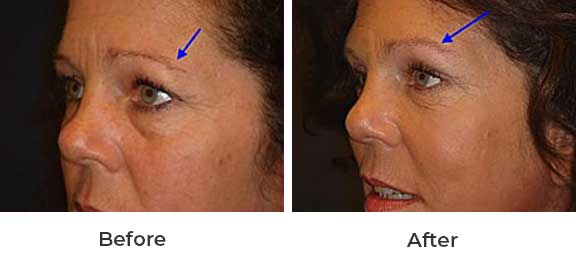
Parotid and Facelift and Mucoepidermoid Cancer Diagnosis and Treatment

Whether you are looking for the diagnosis and treatment procedure for mucoepidermoid cancer or searching for the right treatment procedure for Parotid and facelift. For this, the most crucial thing is to search for the world-class clinic or stay in touch with experienced doctors with specialization in such types of problems. You may find a number of recognized names in this domain. Choosing the best one is a vital decision to make. Don’t forget to go through the details of previous record. 

Alpha Surgical Group is one of the leading groups with clinics at different locations. Professional plastic surgeons are here solving your queries. They offer you the right treatment for facial nerve cancer, salivary gland, facial nerve tumor, Parotid and facelift, salivary gland tumor and parotidectomy and facelift. Make a contact either by giving a call or send a mail and get the right treatment according to your choice and requirement.

It will be better to schedule an appointment for discussion, certain types of tests and to start treatment for the parotid and facelift issues or for the mucoepidermoid cancer. Alpha Surgical Group has become the most trusted name in this domain paving smoothen ways to help you in getting what exactly you are looking for. 

So, what you are looking for, feel free to contact as per your requirement and get the right solutions.

Salivary Gland Tumor and Its Signs and Symptoms

Pleomorphic is a benign salivary gland tumor that has certain types of symptoms and signs. It is a slow-growing, painless, firm and non-tender mass; while it can move (when small) and become fixed as it enlarges. 

Sudden increase in size and pain in a known pleomorphic adenoma may result in intraparenchymal hemorrhage. According to doctors, such type of salivary gland tumor is not life threatening. 

There are different types of benign salivary gland tumors like Adenomas, warthin tumors, Oncocytomas and benign mixed tumors or Pleomorphic Adenomas that can be cured by surgery and by following the right steps of treatment. According to doctors, they are not cancers and don’t generally invade adjacent tissues or metastasize, but can continue to grow and become deforming. It is better to get them removed. A pleomorphic adenoma can transform into a malignancy, but in decades and chances are rare. 

Pleomorphic Adenoma or other salivary gland tumors may occur due radiation exposure – radiation treatments for cancer – mainly one that is used for treating head and neck cancers may increase the risk of salivary gland tumors.  It may be due to older age that is another risk factor, when this type of tumor can occur. Not to mention the workplace exposure that is mainly to certain substances may increase the chances of this tumor type.  

You are advised to consult with doctors to know about the signs and symptoms and get the right treatment procedure.

Consult With Experienced Doctors for Parotidectomy and Facelift

Some health complications are often neglected by people. They may cause big issues The most curical thing is to know about the symptoms and consult with them. Among different types of health complications, Parotidectomy and Facelift can the notable one that needs proper attention and care. It is the most common search online that often draw attention of people and even doctors too.

Talking about the parotidectomy, it is a surgical excision or removal of the parotid gland. It is the main and largest of salivary glands. Being the vital procedure performed due to tumors or neoplasm, it can also be growth of rapidly and abnormally dividing cells that can be non-cancerous (Benign) and Cancerous or Malignant.

The gland in a developed individual – blended with the facial nerve; while it is called as the main nerve – that moves the face and lymph nodes – right gland to clean away infections and some tumors that are found throughout the body. It is the gland that you can see along the facial nerve. For patients, who are facing such issues, the most crucial thing is to search for the right diagnosis and treatment procedure for parotidectomy and facelift.

If you are facing problems and looking for the right facelift option, you need to consult with experienced surgeons and schedule an appointment accordingly. There are a number of renowned names in this domain providing you with the right solutions and ensuring you will get surgical procedure done properly. You have to find the right one that is convenient for you, go through the detail and make a contact.

Everything You Need To Know About Parotid Tumor Surgery

Parotidectomy is the surgical removal of a parotid tumour. It is a procedure for eliminating parotid gland drain infections and tumours. This gland also referred to as a salivary gland, is found on both sides of your face. It is divided into two sections: the deep lobe and the superficial lobe. parotid and facelift is difficult since the facial nerve travels thru the parotid gland. If the procedure disrupts this nerve, significant complications such as facial paralysis will result.

When a tumour, obstruction, or infection of the parotid glands is discovered, surgery is required. Tumours can be malignant (cancerous) or benign (not cancerous) (benign). An abscess in this gland might cause trouble eating and a fever. Furthermore, salivary stones can clog the gland’s drainage channel, causing inflammation and oedema.

This type of tumour surgery might take anywhere from two to five hours. It greatly depends on the number of glands that must be removed. Before performing surgery, the surgeon administers an anaesthetic to the patients. To begin, the surgeon makes a cut from the front of the ear to the neck. If the tumours are benign, the superficial lobe will be excised. If on either hand, the patient has a cancerous gland, it will be completely removed. Unfortunately, there are no other options for treating this tumour. Surgery seems to be the only option for treatment.

Individuals may leave the hospital with a drain and stitch on their skin after surgery. The drain’s purpose is to collect saliva and blood from the wound. The drain must be removed two to four days following surgery. Antibiotics should be taken by the patients to ensure complete healing. In addition, a soft liquid diet is advised.

Things to Know About Lung Cancer Neoplasms

Pulmonary tumours can be benign or malignant, as well as primary or secondary. The number of malignant tumours vastly outnumbers the number of benign tumours.

Benign Tumors: Hamartoma, chondroma of the bronchi, bronchial adenoma, fibroma, neurofibroma, myxoma, and lipoma are examples of benign lesions. Rarely, sclerosing angiomas, lymphocytes, histiocytomas, and endometriosis are found. Primary lymphomas may originate in the lungs. Later on, more sites are also involved. Hematomas are tumours that contain normal elements of the lungs but are disordered.

Bronchial adenoma: These make up 1-6% of all pulmonary neoplasms. Females are more afflicted than males, and the age range is younger than for bronchogenic cancer. Bronchial adenomas and multiple endocrine neoplasias have been linked. The tumours can be carcinoids, cylindroma, mucoepidermoid tumor, or mixed tumours that look like mixed parotid tumours. Adenomas can develop in the bigger bronchi. They can be asymptomatic or cause symptoms including coughing, hemoptysis, bronchial blockage, and recurrent pneumonia. In some circumstances, hemoptysis can be severe and intractable.

Hormone-producing tumours can cause Cushing’s syndrome, acromegaly, or carcinoid syndrome. Any healthy young person appearing with recurring and massive hemoptysis should be suspected of having this condition.

Primary carcinomas of the lungs are rather frequent around the world. The two most common kinds are bronchus carcinoma and alveolar cell carcinoma (bronchiolar carcinoma, pulmonary adenomatosis). The lungs are frequently the site of secondary deposits from malignant tumours that have spread to other organs. Breast, kidney, liver, gastrointestinal tract, testes, prostate, female genital tract, and thyroid cancers, as well as sarcomas of bone and soft tissues, can all cause substantial metastases in the lungs.

An Outline of the Risks and Benefits of a Facelift

A facelift is a cosmetic surgical procedure that improves the patient’s appearance, mainly all around the face and neck. The procedure involves extracting the soft tissues of the face and elevating them while also removing any excess loose skin from the neck and face. The outlines below the muscles are frequently adjusted as well, resulting in a younger-looking countenance. The technique is intended to reduce the droop and sag that often accompany ageing. There seem to be several advantages to the treatment for interested people, but there are also hazards. You ought to be aware of both to make an informed selection.

Risks

No plastic surgery technique can be performed without putting the patient in danger. When your choice to have a parotidectomy and facelift, you ought to be fully aware of what may occur as a result of the treatment. A few of these risks are unavoidable, while others are extremely unusual. Scarring is to be expected since no one has figured out how to make the necessary incisions without leaving scars. A qualified doctor will try to conceal them inside the growth curves of the head and hairline. There’ll be some swelling and bruises for a few weeks following the surgery. Other hazards include transient numbness, hair loss at incision areas, nerve damage, and infection.

Benefits

The purpose of a parotidectomy and facelift is to give patients a more youthful appearance through manipulations and skin removal. According to some specialists, women often get greater results from the treatment than men. This could be due to men’s thicker facial epidermis and larger parotid glands. Either men or women can also have wonderful results with a qualified person who knows how to appropriately personalize his operations to the patient.

The Following Are Some Facts Concerning Parotidectomy That People Should Be Aware Of.

The parotid gland, which is the largest and most essential of the salivary glands, is surgically removed in a parotidectomy. The most prevalent reason for the operation is neoplasms (tumors), which are rapidly and incorrectly proliferating cells. Neoplasms can be malignant or benign (noncancerous).

It’s worth emphasizing that the parotid tumor surgery choice is based on maintaining the facial nerve in order to avoid significant morbidity (diseases). Furthermore, many doubts remain concerning which procedure to choose and the chances of cancer recurrence.

The parotid glands are removed during a parotidectomy with a facelift incision:

• Because of the type of incision and the reconstructive method employed, patients who undergo a parotidectomy typically notice a difference in their look.

• A facelift incision parotidectomy is a comprehensive operation that combines our head and neck and plastic surgeons’ expertise to safely remove parotid gland tumors with minimal scarring. The facial nerve is in charge of closing your eyes, raising your brows, and smiling.

• Your surgeon will do a facelift with an incision that runs behind the ear rather than down the neck, resulting in a more hidden incision. After the tumor is removed, dermal fat grafts (fat retrieved from the abdomen or a muscle flap) are utilized to restore the symmetry of the face, ensuring that your appearance is kept.

Approaches to parotid tumor surgery have been developed to give a safe procedure, limit nerve morbidity, and provide aesthetic satisfaction. We used a facelift incision to perform two parotidectomy surgeries. One example was rebuilt at the parotid bed using a superficial musculoaponeurotic system (SMAS) flap and a sternocleidomastoid (SCM) muscle rotated flap. In the second patient, the same operations were performed, but a collagen membrane was added to prevent Frey’s syndrome. After surgery, two instances obtained beautiful results without the use of a neck scarf and a hollow defect on the parotid bed area.

Everything about Facial Nerves (Cancer)

• The facial nerve regulates facial muscle function. Each person has two facial nerves, one on each side. From the brain to the muscles, the facial nerve travels a lengthy and complicated path. In some situations, tumors can impair the facial nerve. This can be caused by tumors that grow from the nerve itself or tumors that are pushing or invading the nerve from surrounding places. In both circumstances, facial weakness or paralysis may ensue.

Facial nerve tumors are rather uncommon, with facial nerve schwannomas being the most prevalent. These are tumors that develop from Schwann cells, which are the supporting cells of all neurons and can be found along the whole length of any nerve in the body.

The parotid glands are removed during a parotidectomy with a facelift incision:

• Because of the type of incision and the reconstructive method employed, patients who undergo a parotidectomy typically notice a difference in their look.

• A facelift incision parotidectomy is a comprehensive operation that combines our head and neck and plastic surgeons’ expertise to safely remove parotid gland tumors with minimal scarring.

• Your surgeon will do a facelift with an incision that runs behind the ear rather than down the neck, resulting in a more hidden incision. After the tumor is removed, dermal fat grafts (fat retrieved from the abdomen or a muscle flap) are utilized to restore the symmetry of the face, ensuring that your appearance is kept.

Tumor treatment is determined by the type of tumor, whether it is cancerous or benign, its size, location, other affected areas, and the patient’s overall health. Surgery, stereotactic radiation, and observation may be possibilities for benign tumors emerging from the facial nerve itself, such as schwannomas and hemangiomas. Treatment, particularly surgery, is frequently determined by the degree of facial paralysis. In most situations, the facial nerve must be cut during surgery to remove the tumor.

Salivary Gland Tumor: What Is It?

Salivary gland tumors are uncommon, accounting for just 6% of all head and neck malignancies. A slow-growing benign tumor in the parotid gland is the most frequent form of salivary gland tumor (80 percent of all salivary gland tumors). Salivary gland tumor are uncommon.

The cause for most salivary gland cancers is unclear at this time, although genetic research is underway to find out. Skin cancer can sometimes extend to the parotid gland. One sort of benign tumor is known to be caused by smoking.

Salivary Gland Tumor Symptoms

• One of the salivary glands has a firm, generally painless swelling (in front of the ears, under the chin, or on the floor of the mouth). Depending on the underlying reason, swelling can proceed at different speeds. Slow swelling typically indicates the presence of a benign tumor, but quick swelling suggests the presence of a malignant tumor or infection.

• Facial nerve palsy is characterized by difficulty moving one side of the face. This can indicate the presence of a malignant and advanced tumor, particularly in the parotid gland.

Salivary gland tumors can be caused by several factors, including:

• Getting older. Salivary gland tumors can occur at any age, although they are more prevalent in the elderly.

• Radiation exposure. Salivary gland tumors may be increased by cancer radiation therapies, such as radiation used to treat head and neck malignancies.

• Certain chemicals are exposed during work. Salivary gland cancers may be more common in those who deal with specific chemicals. Rubber manufacturing, asbestos mining, and plumbing are among jobs that are linked to salivary gland tumors.

A parotidectomy with a facelift incision is a procedure that removes the parotid glands.

• Patients who have a parotidectomy frequently notice a difference in their look as a result of the type of incision and reconstructive procedure employed.

• Parotidectomy and facelift is a thorough procedure that combines the skills of our head and neck and plastic surgeons to successfully remove parotid gland tumors with little scarring.

• Your surgeon will make a facelift incision that continues beyond the ear rather than down into the neck, resulting in a more concealed incision. Dermal fat grafts (fat extracted from the belly or a muscle flap) are used to recreate the symmetry of the face after the tumor is removed, ensuring that your look is preserved following surgery.

Tumors of the salivary glands are abnormal cell growths (tumors) that arise in the salivary glands. Tumors of the salivary glands are uncommon. Saliva is produced by salivary glands, which improve digestion, keeps your mouth moist, and promote tooth health. The parotid, sublingual, and submandibular salivary glands are located beneath and below your jaw. Other small salivary glands can be found on your lips, inside your cheeks, and all across your mouth and throat.

How Mucoepidermoid Cancer Is Diagnosed Before Surgery

The diagnosis procedure of mucoepidermoid cancer is made after a small sample of the tumor that is removed in a procedure called a biopsy. The tissue sample is examined under the microscope by a pathologist. Mucoepidermoid carcinoma may develop when a cell randomly acquires changes or mutations in genes that regulate how the cell divides such that it begins to grow quickly, forming a cluster of cells (a mass or lump).

Find a Recognized Hospital or Consult with Experienced Doctors

The most crucial part is to search for the top clinic or a hospital that has been recommending you the best treatment procedure and medications. Go online and it can be the best and time-saving options to provide you with the right solutions and complete peace of mind.

You are advised to check all details so that you can get the best treatment procedure recommended.

Among some of the top names in this domain Mucoepidermoid cancer clinics and hospitals, you will find name of Alpha Surgical comes on the top – offering you the right treatment solutions. Go through the details, get the right solutions and stay relaxed.

A team of dedicated professionals, and surgeons has been working here, who have proven track record and expertise enough. Go through the details and get the right treatment procedure done in timely manner.

Design a site like this with WordPress.com
Get started