Useful Information about Cut Facial Nerve

The cut facial nerve is a nerve that controls the facial muscles. It gives people the chance of talking, laughing, weeping, and winking. Facial nerve damage may result in a socially and psychologically debilitating physical defect, although therapies can eventually involve comprehensive reconstruction or many processes, in most cases resolved spontaneously.The nerve is the 7th of the 12 nerves of the skin. On both sides, on either side of the face, are two facial nerves. The face nerve moves around the structures of the middle ear with the hearing nerve. The stylomastoid foramen, then passes through the parotide gland, is located on the forehead of the ear. It divides into several branches in a parotide glans that provide motor function for the various head and neck muscles and glands.

Facial nerve disorders can lead to facial muscle paralysis, faintness or face twitching. Eye or mouth dryness, taste changes on the affected hand, or even excessive tearing or salivation may also be observed. The identification of one of these signs does not necessarily entail a particular issue of the facial nerve. In order to make a definitive diagnosis, doctors must carry out a thorough analysis. The symptoms of a problem with the face nerve may vary depending on the extent of nerve injury. Symptoms can range from mild to full twitching on one side of the face to muscle paralysis. Cut Facial nerve disorder causes differ from life threatening unidentified. The problem is sometimes treated in a specific way.

Let’s understand what is Salivary Gland

A tissue in the mouth that expels saliva is the salivary gland. If people eat something very good, they can feel their salivary glands firing. They send saliva to the mouth as exocrine glands viaducts. Just one-quarter of the saliva is produced every day. Saliva is a combination of enzymes such as fat, mucus, antibacterial, and diabetic. Amylase is among the most widespread in human digestive enzymes saliva. The enzyme can break down the starch in the diet to make sugars like glucose and maltose easier and more easily digestible. Whenever people chew they activate salivary glands in preparation for meal breakdown. Species have several functions in the digestive system, besides breaking down starches. Saliva also supports the lubrication of the mouth and digestive tract and ensures that it works correctly.

Normally, salivary glands function without a problem, but a blockage or infection within the salivary glands may cause severe pain and discomfort. The salivary glues are in several areas across the mouth and have ducts with the top and bottom jaws. This ensures the inner mouth is evenly covered by saliva. Individuals will feel these ducts’ end just under the tongue and around the inside of their upper lips. The salivary glands can also feel the saliva activation and release if they eat anything with a lot of starch or sugar. It is helpful to build a food bolus or the fine packed ball that rolls inside the mouth as the only secretion in the salivary glands. 

Mucoepidermoid tumor – Salivary gland cancer

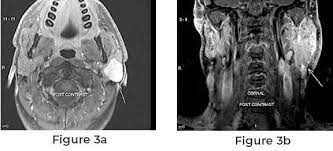
A mucoepidermoid tumor isa very rare and distinct type of tumor which mostly develops in the salivary gland. The process of development of this tumor is that the cell randomly acquires changes in genes that regulate the cell division. This cell changes grow quickly in order to form a cluster of cells.

A lump in the face, mouth, and neck is the earlier sign of the Mucoepidermoid tumorYou may also feel pain in the part of the face, weakness, and numbness. And in order to treat thetumor, it requires a surgery which includes removal of the entire tumor. Some of the physicians also use random therapy in the earlier stage in order to ensure that no cancer cell remains in the body.

Symptoms of Mucoepidermoid tumor

The mucoepidermoid tumor generally occurs in adults from the age of twenty to forty year. Some of the common symptoms of this tumor are:-

  • Tenderness – It is a pain or discomfort when the affected area is touched.
  • Otorrhea – It is the discharge from the outer part of the ear canal.
  • Dysphagia – It is difficulty in swallowing or swallowing problems.
  • Trismus – A painful condition in which the jaws do not open fully or lockjaw.

The above mentioned are some of the come symptoms of the tumor, and you must take proper care in case if you are suffering from any of these problems. Palliative radiotherapy could be useful when the patient is too frail for surgery or surgery is not possible due to the extent of disease.

The general guidance for Parotid tumor surgery recovery and aftercare

If you have gone through the Parotid tumor surgery, then you must take proper care and medication as provided by your physician. You may also take some additional care in order to quick recovery and to reduce the chances of infection or any side-effects. The recoveries of Parotid surgery are always prompt and rapid. The Parotid surgery is done to treat your Parotid tumor, and after the surgery, a formal dressing will be presented to you. After Parotid surgery, you may require extra care as it might be painful, and you may feel tired very easily.

Parotid tumor surgery and aftercare tips:

Parotid tumors are not very common; you may require extra care, and it also may lead to surgery in case of the infectious Parotid tumor. But if you have gone through the Parotid tumor surgery then on the first day after the surgery firstly the drain tube will be removed. The second day of the surgery is all about parotid dressing removal. After the removal of the parotid dressing the area of surgery must be open so that air could pass which lead to a quick recovery.

Your physician may recommend you with some antibiotic ointment that should be applied for quick recovery and to avoid infection. After five to seven day of your surgery, the sutures that were put must be removed by cutting and pulling. You may take proper rest and must avoid any heavy or tiring work. You must also avoid smoking as it reduces the recovery time of your Parotid surgery.

Find Top Clinic for Salivary Gland Tumor and Parotid and Facelift Treatment

If you are looking for the right treatment for Salivary Gland tumor or looking for parotid and facelift, you will have some better options to fulfill your requirement by going online and reaching the right clinic. It is better to schedule an appointment according to your choice and requirement, go through the details and make a contact.

There are different other types of treatments and surgical procedures completed successfully by them that include treatment for salivary gland, facial nerve cancer, parotid tumor, facial nerve tumor, parotid and facelift, Mucoepidermoid cancer, and various others.

Go Online to Find Top Professionals for Salivary Gland Tumor and Parotid and Facelift Treatment

Go online and you will find a number of top clinics in this domain providing you with the right treatment and solutions. They listen to your requirement, do proper check-ups and get tests done to diagnose the problem and then start offering you treatment.

Alpha Surgical Group has been offering you the right treatment and solutions that will surely enhance your facial look and make you able to stay tumor free.

Proper diagnosis and then providing you the right surgical treatment will be an amazing experience for you. Go through the details and make a contact to get the right treatment.

Parotidectomy and Facelift – Essential to Remove Tumor and Make Face Look Better

Paratidectomy, the surgical excision or removal of the parotid gland, is the most vital procedure – performed due to tumors or neoplasms – that are growth of rapidly and abnormally dividing cells. Tumors or Neoplasms can be benign or non-cancerous and malignant or cancerous. Parotidectomy and facelift are two important procedures that are successfully done by professional surgeons after proper checkup and necessary medical tests.

A parotidectomy is done through incision in front of the ear in a natural skin crease – extending down into a natural skin crease in the neck. It allows surgeon to hide the scan in the possible way in comparison to make an incision directly in the middle of your face. Not to mention facelift incision that is the way of providing adequate exposure of the parotid gland for superficial Parotidectomy that can be offered as an alternative to a selected group of patients, mainly those who present with a small, mobile tumor in the tail of the parotid gland.

It is one of the most vital and surgical procedure that is done by experienced and professional’s surgeons, who have proven track record and years of experience in providing you with the right solutions. If you are one of them looking for the right solutions and Parotidectomy and facelift, you will get some better options to fulfill your requirement by reaching the right clinic or an experienced cosmetic and plastic surgery expert.

Make a contact and leave rest of the work on experts.

Parotid Removal and Parotid Tumor Surgery by Experienced Surgeons

The parotid gland, one of the several salivary glands is the largest one – located in front of the ear and goes to approximately the angle of the jaw that is formed a little too early during the development of the embryo occurs at the same time as lymph nodes and nerves. This gland is mixed with the facial nerve and lymph nodes – the glands that clean away infections and some tumors that are found throughout the body. The location of the gland is seen along with the facial nerve. Parotid removal is one of the important procedures that need proper attention and surgery that is done in precise and secure way.

Parotid tumor surgery is done to remove tumors – mass in the back part of the check in front of the ear. Some of the common symptoms that indicate for the Parotid tumor surgery include facial paralysis, pain, check numbness, ear pain, swelling and trismus.

For the surgical procedure or parotid removal, you need to consult with experienced surgeons. For this, go online and search for the right clinic or a center for surgery. You will find a number of top names in this domain offering you precise solutions.

Go through the details and make a contact for parotid removal and for parotid tumor surgery. Feel free to contact as per your requirement and leave rest of the work on experts working here.

Salivary Gland Tumor – Know The Causes And Symptoms

Salivary gland tumor, a rare tumor type, often starts in the salivary glands – mainly in any of the salivary glands in your mouth, neck or throat. Salivary glands play a pivotal role in making saliva that aids in digestion and keeps your mouth moist as well as supports healthy teeth. It is a type of head and neck cancer that involves abnormal or malignant growth of salivary gland cells. Older age, radiation therapy to head and neck and exposure to cancer-causing chemicals at work may increase the possibility of salivary gland tumor.

There are various signs that indicate patient is suffering from salivary gland tumor. Lump or swelling in your mouth, check, jaw and neck, pain in your mouth, check, jaw, ear or neck that doesn’t go away, a difference between the size and/or shape of the left and right side of your face or neck and numbness in part of your face, etc are some of the common signs of salivary gland tumor.

In that case, you need to consult immediately with your physician or medical practitioner. Proper tests are important to diagnose the problem and them getting the right treatment.

You can also get precise solutions and the right treatment from Alpha Surgical. You have to make a contact either by giving a call or sending a mail. Complete solutions are provided here to get rid of salivary gland tumor.

Parotidectomy- Perfect Treatment For Parotid Tumor

parotidectomy

The procedure is mostly used in the treatment of benign or malignant tumors. It refers to the surgical removal of the parotid gland, which is the major salivary gland. Most of the patients infected from benign gland tumors and few are the sufferers of the malignant tumor. The parotid gland weighs in the range from 15- 30 g and the entire area is known as the preauricular region. It is categorized into two parts according to the facial nerve named as the superficial and deep lobe. 

Parotidectomy is also of two types:

Partial Parotidectomy: it is the standard procedure for benign tumors with low mark malignancies. Resection of parotid pathology with a brim of ordinary parotid tissue.

Superficial Parotidectomy: it is performed by doing the resection of the entire superficial lobe and it is generally applied for metastases to modes such as skin cancers.

Total Parotidectomy: With the defense of facial nerves, resection is done on the entire parotid gland. It depends on the nerve affected, whether facial nerve branches may be a sacrifice or the trunks.

Extended Total Parotidectomy: To perform the treatment on the in-line structure, removal of superficial and parotid gland will be protracted.

All these techniques should be performed under endotracheal anesthesia and the posture of the patient should be 45-degree lounge chair positive with head high. A few complications may the result of this treatment include salivary fistula, infection, hematoma, cosmetic malformation or infection. Facial nerves should be tested and monitored before carries out any procedure on the patient.

When Should You See A Doctor In Case Of Salivary Cancer?

It is important to schedule an appointment to doctors, if you have any sign or symptom like having a lump or an area of swelling near your salivary gland as it is the most common sign of a salivary gland tumor. However, it doesn’t mean you have salivary cancer. Most salivary gland tumors are noncancerous or called as benign. However, some of them may lead to a swollen salivary gland – an infection or a stone in a salivary gland duct.

As far as salivary gland cancer is concerned, it is a rare disease in which malignant or cancer cells form in the tissues of the salivary glands. It is one of the most vital type of gland that makes saliva and releases it into the mouth. Saliva has enzymes that help digest food and antibodies to protect against infections of the mouth and throat. There are some common symptoms that may result in salivary gland cancer. Some of the common symptoms include:

Trouble opening your mouth widely

Muscle weakness on one side of your face

A lump or swelling on or near your jaw or in your neck or mouth

Persistent pain in the area of a salivary gland

Numbness in part of your face

Difficulty swallowing

You should consult with doctors to get the right solutions. Alpha Surgical Groups has been recommending you the right treatment and surgery for Salivary gland cancer.

Design a site like this with WordPress.com
Get started